
Classes and schedule
Two classes, two evenings a week. Everyone learns the same complete system, from the first stance to black belt.
Weekly schedule
Classes are divided into beginner, intermediate and advanced groups, each with its own instructor. Tournament preparation is available on request.
Ages 3–6
A 30-minute class for the youngest students, led by Robbie Gorringe, our Little Ninjas and kids beginner instructor.
- When
- Monday and Tuesday, 6:30–7:00 pm
Ages 7–13 and adults
The full one-hour class. Children and adults train side by side, so parents can learn with their kids instead of waiting in the car.
- When
- Monday and Tuesday, 7:00–8:00 pm
How a class runs
Each class starts with a 10–15 minute warm-up that stretches the major muscle groups and loosens the joints. Flexibility and overall strength are a big focus. The rest of the class is the main instruction for the day.
What you learn
Fulshear Family Karate is a member of the Zen Do Kai Association. The curriculum is based on Shotokan Karate, the Japanese style founded by Gichin Funakoshi, but it is not a strictly traditional system: it keeps adding what works from other martial arts, especially for self-defense. The goal is a complete martial artist.
Basics
Proper hand and foot techniques, stances and breathing, and the etiquette of a martial arts class, so you can visit any school and feel at home. Range of motion is worked hard, especially for kicks.
Self-defense
From avoiding trouble to defending against punches and kicks, takedowns, sweeps and throws, control techniques, multiple attackers and weapons. Attacks get more realistic at every level, and break falls are taught before any takedown defense.
Kata
Forms that link techniques into a sequence imitating a real fight. Students perfect their technique, condition mind and body, and learn how to present a kata to tournament judges.
Weapons
Traditional Okinawan weapons used for defense: the bo (six-foot staff), the sai (short three-pronged sword) and the bokken (wooden practice sword). Techniques are learned first, then applied in a kata.
Sparring
Controlled sparring that simulates real conflict as closely as is safe. Full contact is not allowed, and sparring gear and safety equipment are required from gold belt up.
Ten belts to black belt
Basics, self-defense, kata and weapons are tested at every belt test. Sparring is tested from green belt up.
Students: download the test sheet (Excel). Saving the file is faster than opening it in the browser.
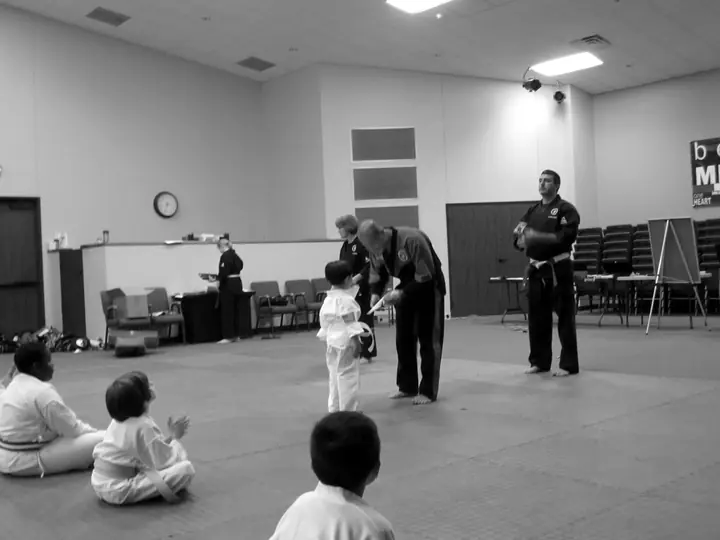
- Gold
- Orange
- Green
- Blue
- Purple
- Red
- Brown, 1st
- Brown, 2nd
- Brown, 3rd
- Black
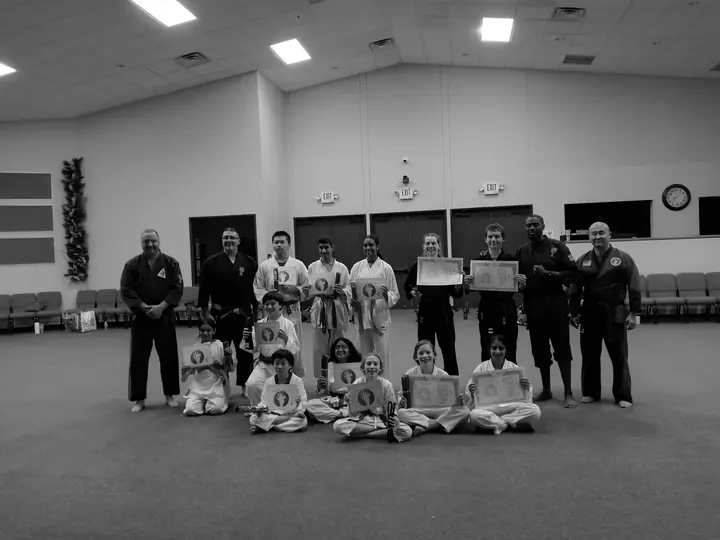
Tournaments are optional
Many of our students compete in local and state karate tournaments, and preparation is available on request. Every student learns tournament etiquette and how to present a kata to judges, but nobody has to compete.